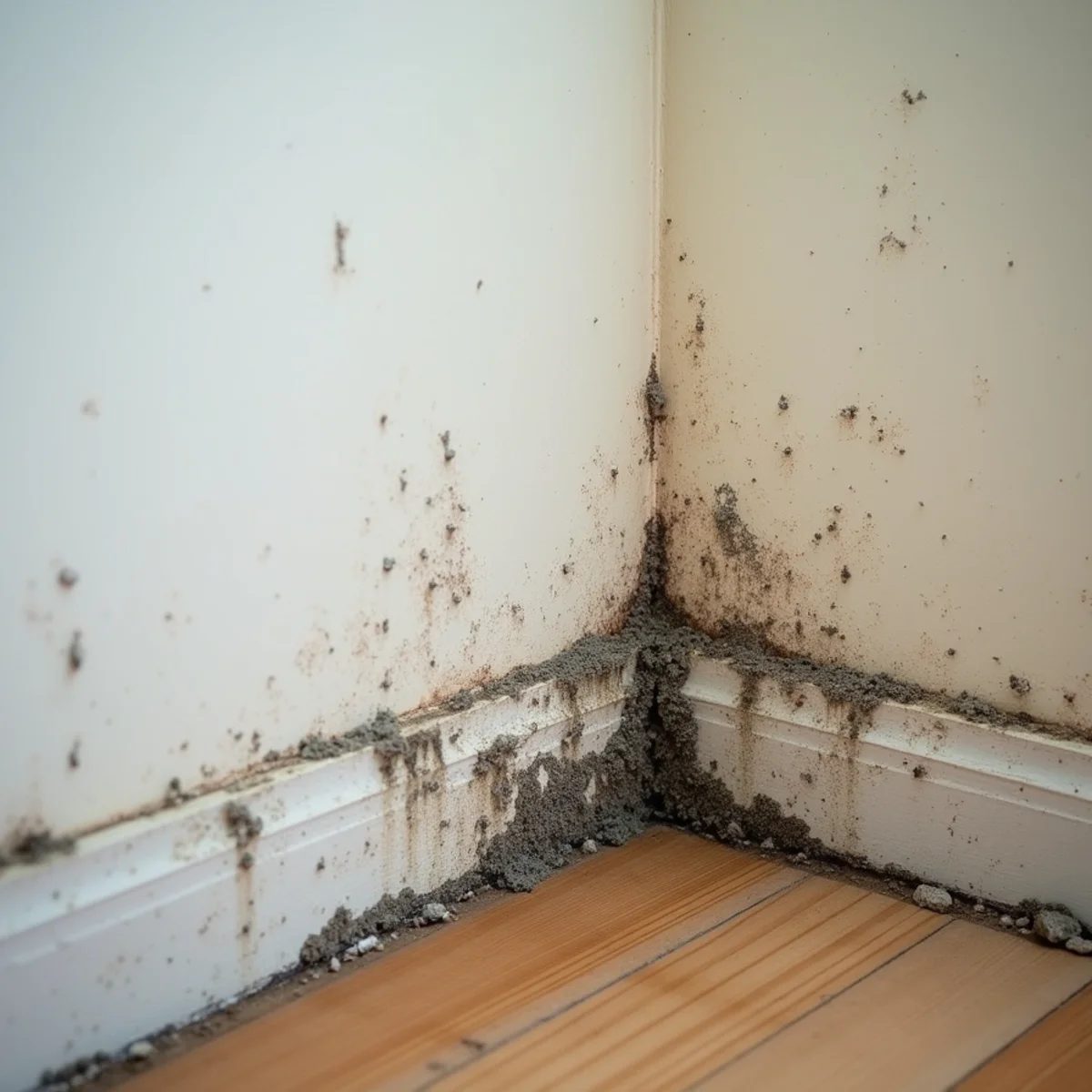

That Brown Ring Is the Tip of the Problem
After a hard South Florida storm, a lot of homeowners notice a brown ring or a soft, bulging patch on the ceiling. It looks minor, but a ceiling stain means water has already traveled through your roof or attic and soaked the drywall from above. The space between your roof deck and your ceiling is dark, warm, and often poorly ventilated, which is close to ideal for mold. Because mold can begin growing within 24 to 48 hours on wet materials, the window to respond is short.
The leak you see on the ceiling is rarely directly below the roof entry point. Water follows rafters, trusses, and pipes before it finds a low spot to drip through, so the source can be several feet away. That is why guessing at the cause usually leads to repeated leaks.
There is one more reason ceiling leaks deserve urgency: gravity works in the mold's favor. Water that enters high in the structure has an entire attic and wall system to spread through on its way down, wetting insulation, framing, and the back of the drywall along the way. By the time it reaches your line of sight, it has often already dampened materials you will never notice from the living room, which is why what looks like a small stain can sit on top of a much larger wet zone.
First, Relieve the Water and Protect the Room
If the ceiling is sagging or bulging, it is holding water and could collapse. Place a bucket underneath, and if you feel safe doing so, use a screwdriver to poke a small drain hole at the lowest point of the bulge to let the water out in a controlled stream rather than a sudden failure. Move furniture and electronics out from under the leak and lay down towels or a tarp. Do not paint or patch over a stain until the source is fixed and the area is fully dry, because sealing in moisture only hides an active problem.
Find and Stop the Water Entry
During an active storm, roof work is dangerous and often impossible. If the leak is severe, a temporary interior catch system and a tarp over the roof once conditions are safe can limit further intrusion. Homes across Miami Gardens and the rest of the county take a beating during our May-through-October rainy season, and older roofs, worn flashing around vents, and clogged gutters are the usual culprits. Our storm damage restoration team can tarp, stabilize, and begin drying so the damage stops spreading while roof repairs are arranged.
Not every ceiling leak comes from the roof, either. Second-floor plumbing, an overflowing upstairs tub, a leaking AC handler mounted in the attic, or a condensate line that has backed up can all show up as a ceiling stain, and a storm sometimes just coincides with an unrelated failure. That is why the first job is finding the true source rather than assuming. If the stain sits directly under a bathroom or an air handler rather than under a roof plane, the cause is probably plumbing or HVAC, and the repair path is completely different.
Why the Attic Is the Real Battleground
The visible stain is only the exit point. Above it, insulation may be saturated, the drywall's paper backing may be feeding mold, and the wood framing may be holding moisture you cannot see from below. Wet insulation loses its R-value and rarely dries on its own in a humid attic, so it usually needs to be removed. Our technicians use moisture meters and thermal imaging to map how far the water spread, then dry the cavity properly. If mold is already present, our mold remediation crews contain and remove it following the IICRC S500 and S520 standards rather than just painting over the evidence.
Repairing the Ceiling the Right Way
Once the source is fixed and moisture readings confirm the structure is dry, we address the ceiling itself. Lightly stained but structurally sound drywall can sometimes be dried, sealed, and repainted. Drywall that is sagging, crumbling, or shows mold growth needs to be cut out and replaced. Our ceiling leak repair service restores the finish so it matches the surrounding surface, but only after we have confirmed the space behind it is dry and clean. Skipping the drying step is the most common reason a repaired ceiling stains again a few months later.
How to Read What the Ceiling Is Telling You
- A stain that grows or darkens between rains signals an active, ongoing leak, not old damage.
- A sagging or bulging patch is holding water and carries a real risk of sudden collapse.
- A musty smell near the stain usually means mold is already active in the attic above.
- Several stains in a straight line often trace water running along a rafter, truss, or pipe.
- Paint that peels or blisters outward from the stain shows moisture has spread into the drywall itself.
Do Not Wait for It to Dry on Its Own
It is tempting to watch a small stain and hope it resolves, but in our climate a ceiling leak that sits becomes a mold problem, and mold above your living space affects the air you breathe. A same-day inspection tells you whether you are dealing with a quick dry-out or something that has already spread.
Ultra Mold Water Restoration responds 24/7 throughout South Florida. If a storm just left a stain or a bulge on your ceiling, call (866) 688-0301 and we will inspect the attic, find the source, and dry it before mold gets a foothold.
Dealing with this right now?
Ultra Mold responds 24/7 across South Florida.
Frequently asked questions
If a ceiling is visibly sagging with trapped water, draining it through a small hole at the lowest point can prevent a sudden collapse. Only do this if you can work safely from stable footing, and place a bucket underneath first.
Mold can begin growing on wet drywall and framing within 24 to 48 hours, and the attic's warmth and poor ventilation accelerate it. That is why fast drying and inspection matter more than the size of the visible stain.
Not until the source is fixed and the area is confirmed dry. Painting over an active leak seals in moisture and hides mold growth, and the stain will usually return.
Sudden storm damage to a roof is often covered, but long-term wear or deferred maintenance may not be. The carrier decides based on the cause, so document the damage and report it quickly.