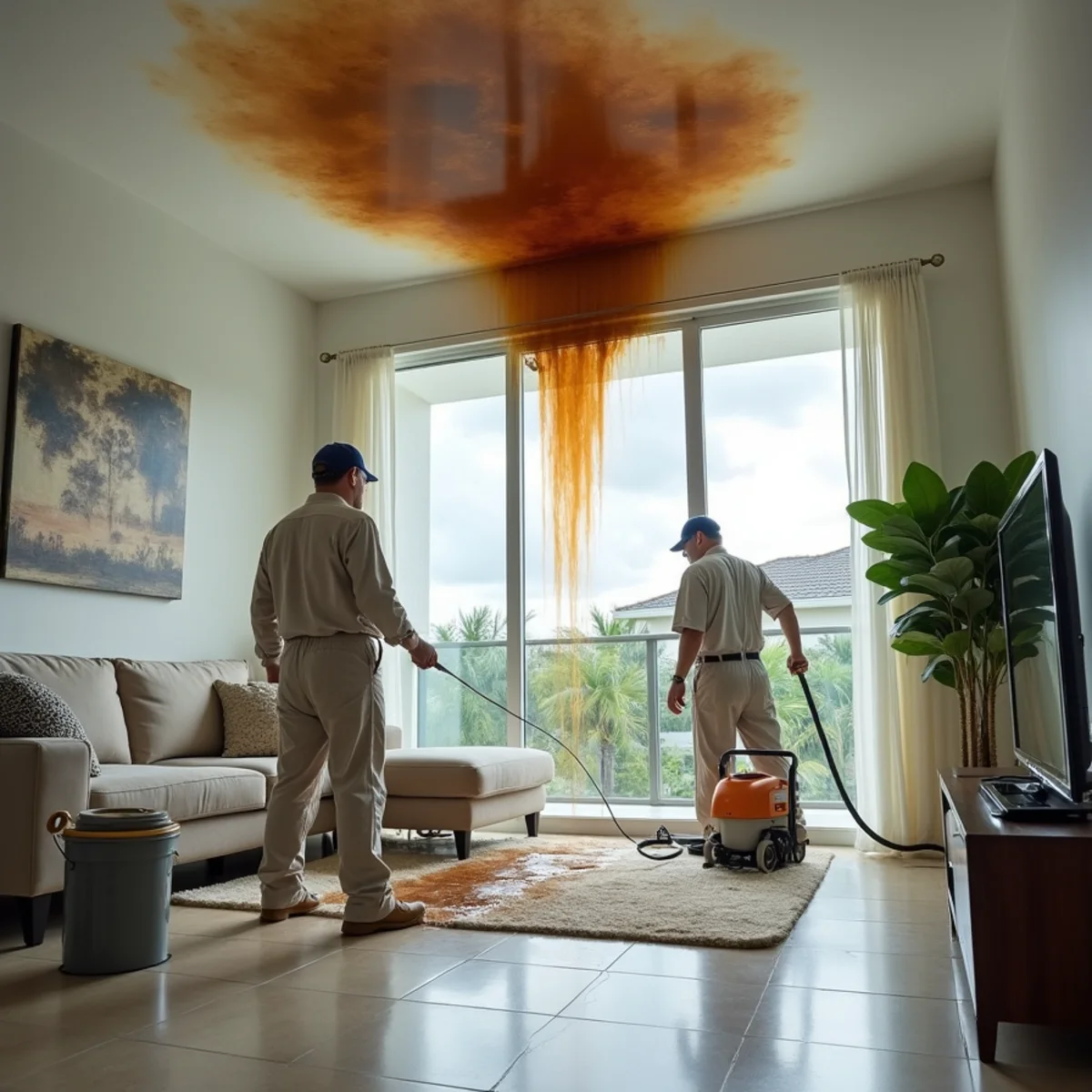
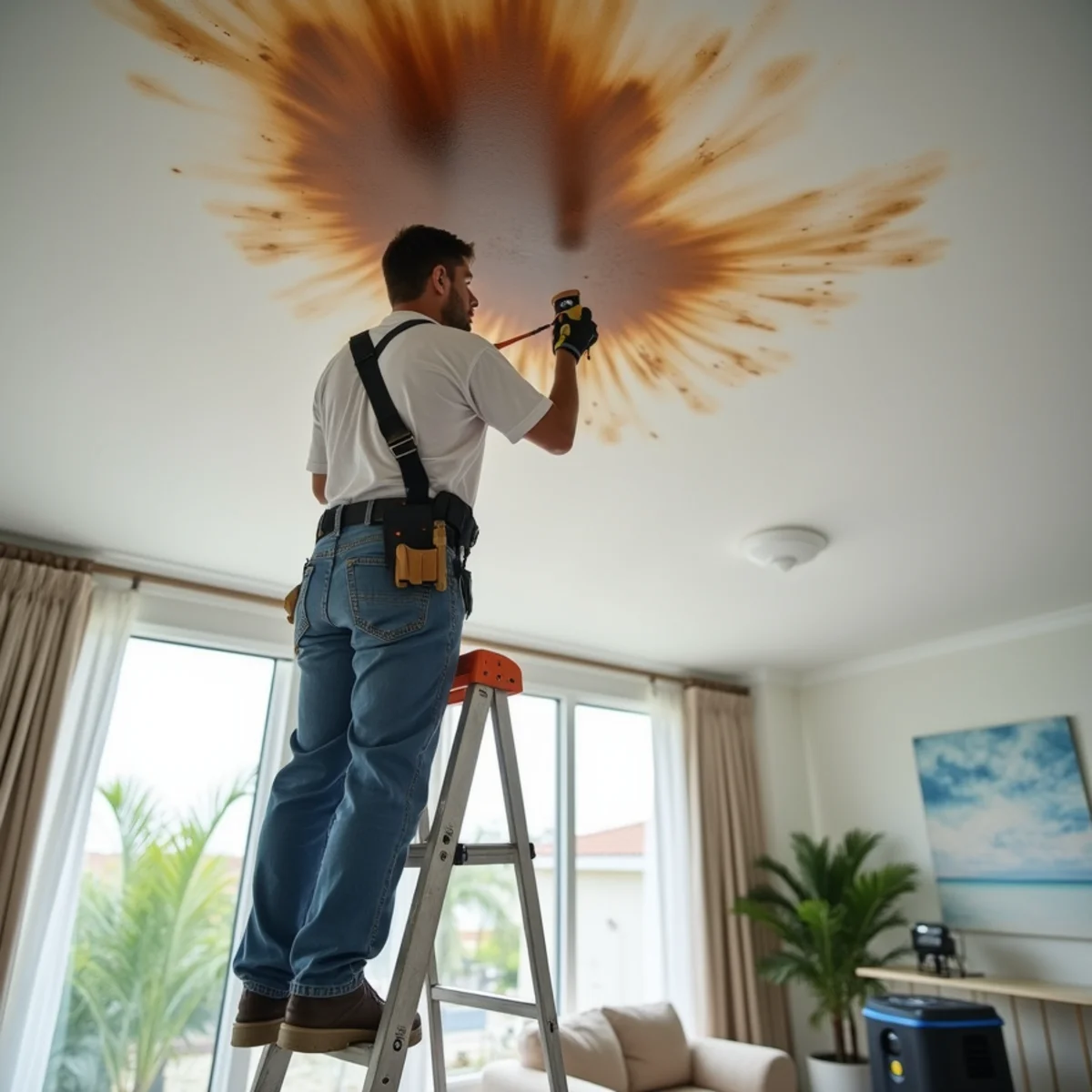
A brown ring on the ceiling, bubbling paint, or a soft, sagging patch is a warning that water is moving through the structure above you. Whether the source is a roof leak, a failed pipe in the floor above, or an upstairs bathroom, the ceiling shows the damage after moisture has already collected.
Ceiling and roof leak cleanup protects people from a potentially failing ceiling, finds and documents the source, dries the affected framing and drywall, and prevents mold in the concealed space above. A sagging ceiling holding water is a safety hazard as well as a water problem.
Ultra Mold Water Restoration handles ceiling and roof leak water damage across Miami-Dade, drying the hidden structure and coordinating the roof or plumbing repair separately.
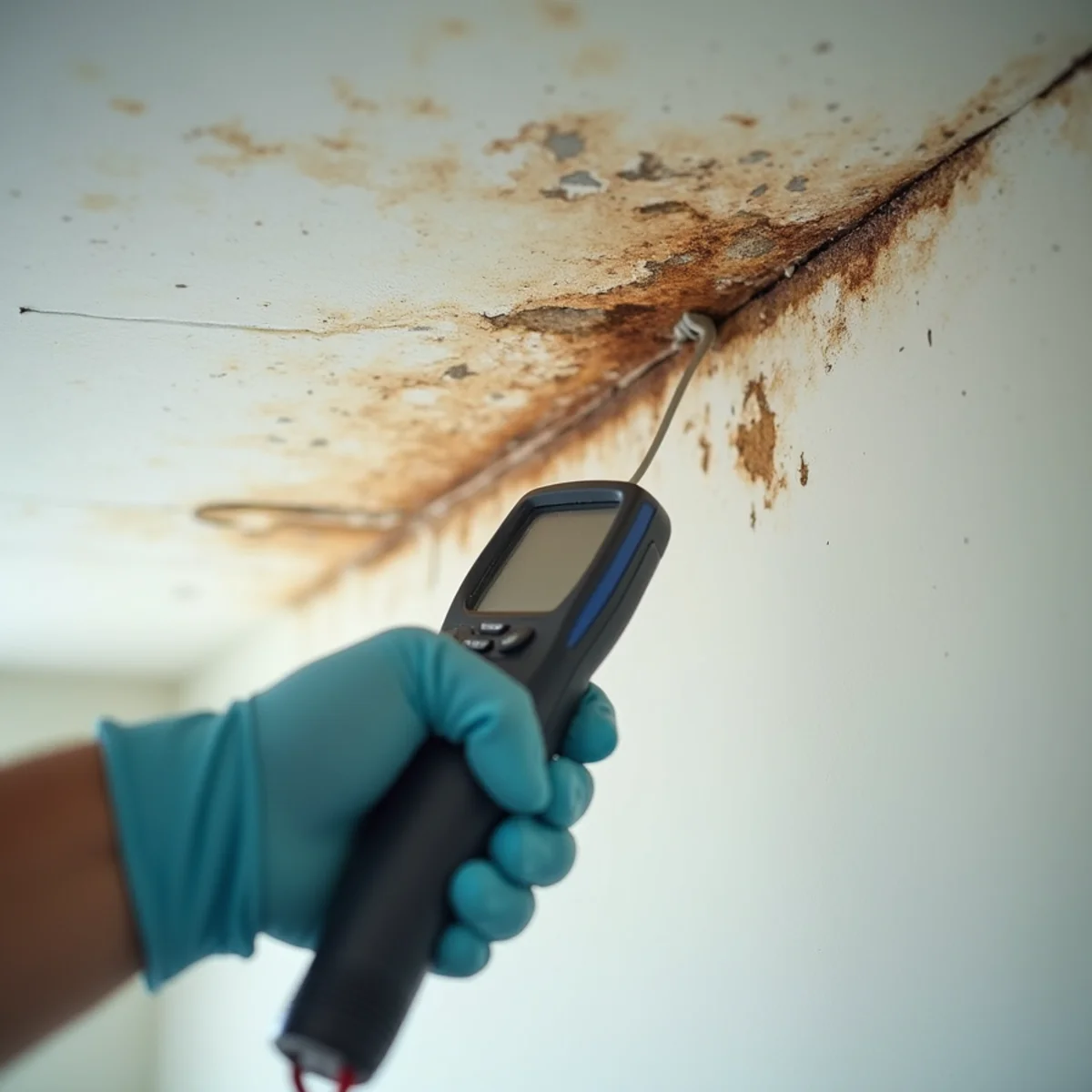
Warning signs you shouldn’t ignore
- Brown or yellow rings and stains on the ceiling
- A ceiling area that sags, bulges, or feels soft
- Peeling or bubbling paint overhead
- Active dripping during or after rain
- A musty smell coming from the attic or upper cavity
- Water stains that reappear or grow after each storm
Why Ceiling Leaks Are Deceptive
By the time a ceiling shows a stain, water has usually already saturated insulation, drywall, and framing above the finished surface. A small visible ring can sit below a much larger wet area, and trapped water can pool above drywall until the ceiling sags or gives way.
Roof leaks in Miami are often driven by wind-driven rain during the rainy season, so a leak may only appear during storms and then seem to "dry up," while moisture lingers in the attic or cavity and quietly feeds mold.
Safety First With a Sagging Ceiling
A ceiling holding water can fail suddenly. Keep people and pets away from a bulging or sagging ceiling and out from under damaged areas until they are assessed.
- Stay clear of any sagging, bulging, or dripping ceiling area
- Move furniture and valuables out from underneath when the path is safe
- Place a container to catch active drips if you can do so safely
- Turn off electricity to the area if fixtures or wiring may be wet
- Photograph the ceiling, the source if visible, and the affected rooms
- Call for assessment rather than puncturing the ceiling yourself
Our Ceiling & Roof Leak Process
- 1
Safety and source assessment
We assess the ceiling for failure risk, protect people from damaged areas, and identify whether the source is roofing, plumbing, or an upstairs fixture.
- 2
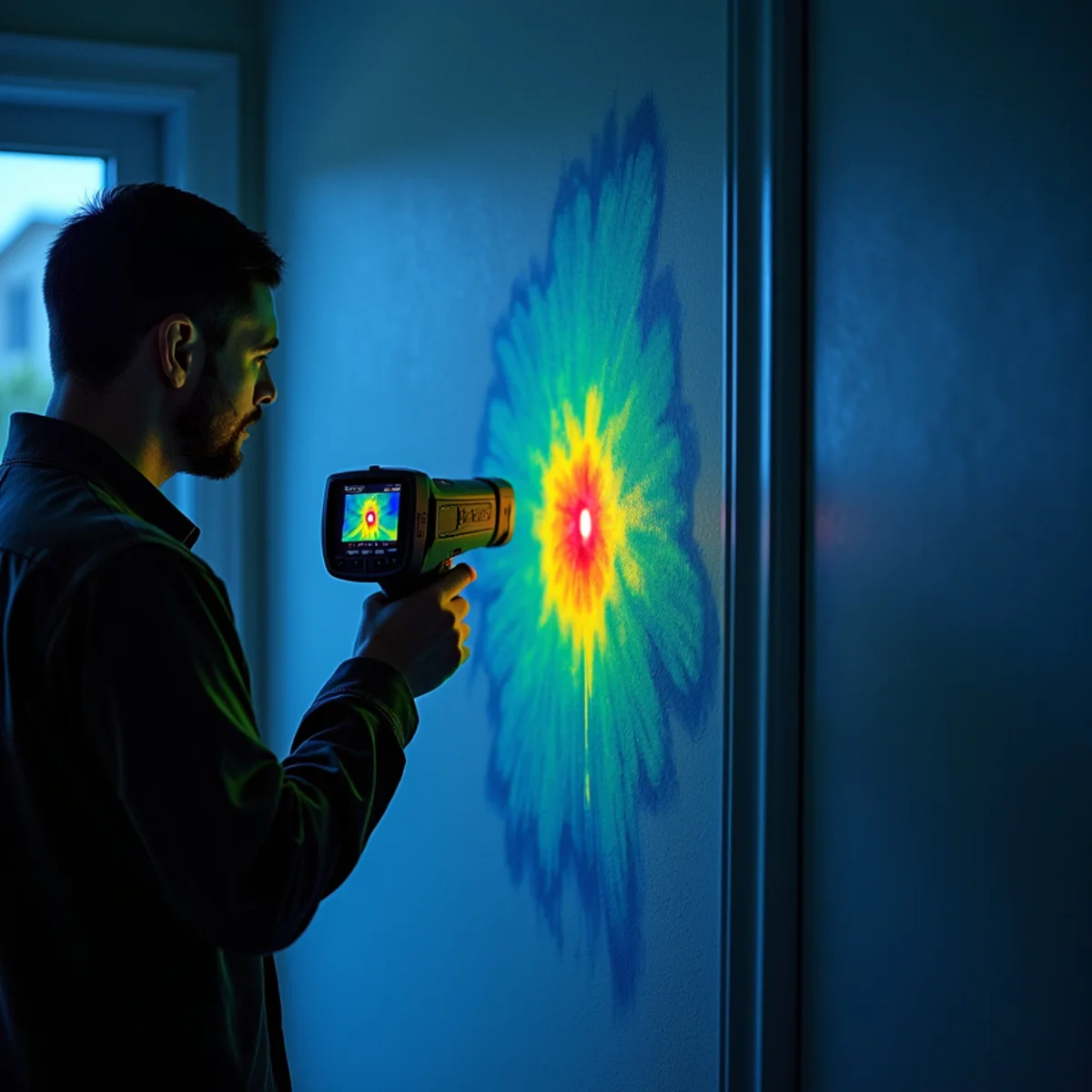
Moisture mapping above and around the leak
We map moisture in the ceiling, attic space, and adjacent walls, because water travels along framing and rarely stays directly under the source.
- 3
Controlled removal and extraction
Where water is trapped or drywall is saturated, we make controlled openings, extract water, and remove unsalvageable material when authorized.
- 4
Structural drying
Air movers and dehumidifiers dry the framing, insulation cavity, and drywall while we monitor readings toward a dry condition.
- 5
Repair coordination and documentation
We document the loss and coordinate the roof or plumbing repair as a separate scope from the interior drying and finish work.
Preventing Mold Above the Ceiling
The concealed space above a ceiling is exactly the kind of dark, humid, organic environment mold favors, and it can grow unseen after a roof leak. Drying the cavity and verifying with readings, rather than painting over a stain, is what actually prevents a mold problem.
Do not close up or repaint a ceiling until the drying decision is documented. A fresh coat of paint over damp drywall hides the moisture without solving it.
Where Ceiling and Roof Leaks Come From
A ceiling leak is a symptom; the source is usually somewhere less obvious. Pinpointing it is essential, because drying without correcting the source only buys a little time before the stain returns.
- Wind-driven rain entering damaged or aging roofing
- Cracked or lifted tiles and failed flashing around penetrations
- A leaking pipe or fixture in the floor or unit above
- Overflowing or clogged AC condensate lines in the attic or ceiling
- Backed-up roof drains and scuppers on flat South Florida roofs
Why Choose Ultra Mold for Ceiling and Roof Leaks
A stained or sagging ceiling is a safety issue and a hidden-moisture problem at once. We treat both: protecting the area from a failing ceiling, drying the concealed cavity and framing above it, and coordinating the roof or plumbing repair separately so the leak is actually stopped, not just painted over.
- Safety-first handling of sagging, water-filled ceilings
- Moisture mapping of the attic, cavity, and adjacent walls
- IICRC-certified drying verified with documented readings
- Coordination of the roof or plumbing repair as a separate scope
- Licensed and insured, working the ANSI/IICRC S500 standard
Ceiling and Roof Leak Service Across South Florida
We dry out ceiling and roof leaks throughout Miami-Dade and Broward, including Kendall, Doral, and Homestead in Miami-Dade, and Hollywood, Miramar, and Weston in Broward.
Flat and low-slope roofs are common across South Florida, and they fail in predictable ways: backed-up drains, tired flashing, and wind-driven rain during the May-through-October season. Local experience tells us where water tends to enter and travel above a ceiling, so we map the real wet area instead of drying only under the small visible stain.
We also see the same recurring sources across local homes and condos: attic condensate lines, second-floor bathrooms, and flat-roof drainage that backs up in a downpour. Tracing the leak to its true origin, rather than the spot where it happens to show through the ceiling, is what keeps the stain from reappearing after the next heavy rain.
What affects the cost
Every loss is different. These are the factors that shape your estimate — we confirm the scope during your free inspection, and the figures below are planning ranges, not a quote.
- Extent of ceiling and drywall saturation
- Whether the source is roofing, plumbing, or an upstairs fixture
- Amount of controlled removal and structural drying required
- Access to attic or concealed cavity space
- Coordination with roof or plumbing repair
- Finish and paint restoration after drying
- Ceiling leak mitigation follows standard planning ranges, with structural drying near $600 to $1,500 per room; the inspection sets the true scope
Need help right now?
Certified crews, 24/7, across South Florida.
Frequently asked questions
Yes. A ceiling holding water can fail suddenly and drop debris and water. Keep people and pets clear of the area and call for assessment rather than puncturing it yourself unless it is clearly safe to relieve an active drip.
Likely yes. A dry-looking stain often sits below insulation and framing that are still damp, especially after a roof leak. Moisture mapping determines whether the concealed space needs drying before mold develops.
We can take steps to limit further intrusion and begin drying, but lasting results require the roof repair. We coordinate the roofing work as a separate scope from the interior drying and finish restoration.
Not until the area is confirmed dry. Painting over damp drywall hides the moisture and can trap conditions that feed mold in the cavity above. We document a dry condition before finish work.
Our focus is the interior water damage: drying the ceiling, cavity, and framing and preventing mold. We can take stabilization steps to limit further intrusion and coordinate the roofing or plumbing repair as a separate scope, so the source is fixed and the structure is dried without the two jobs getting confused.