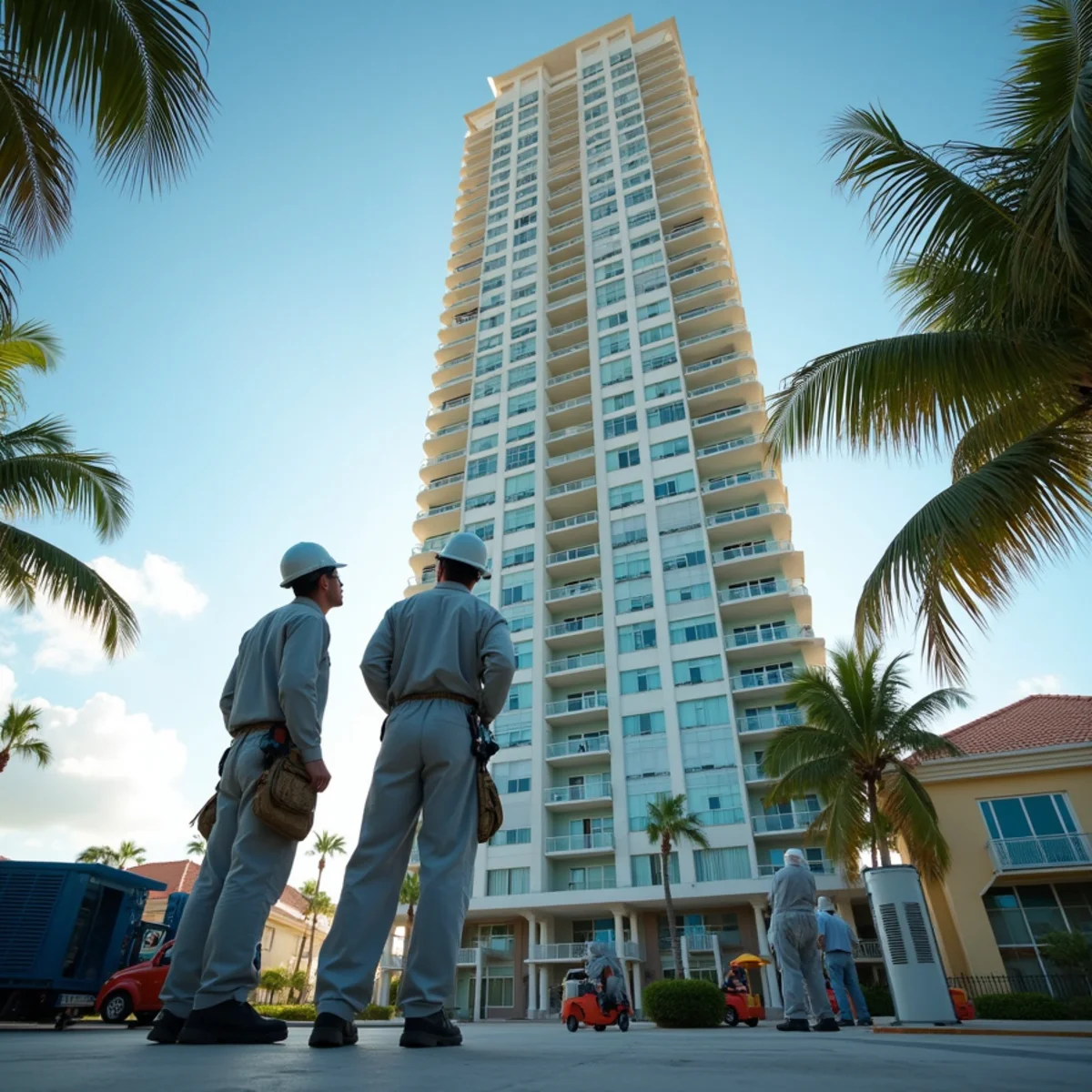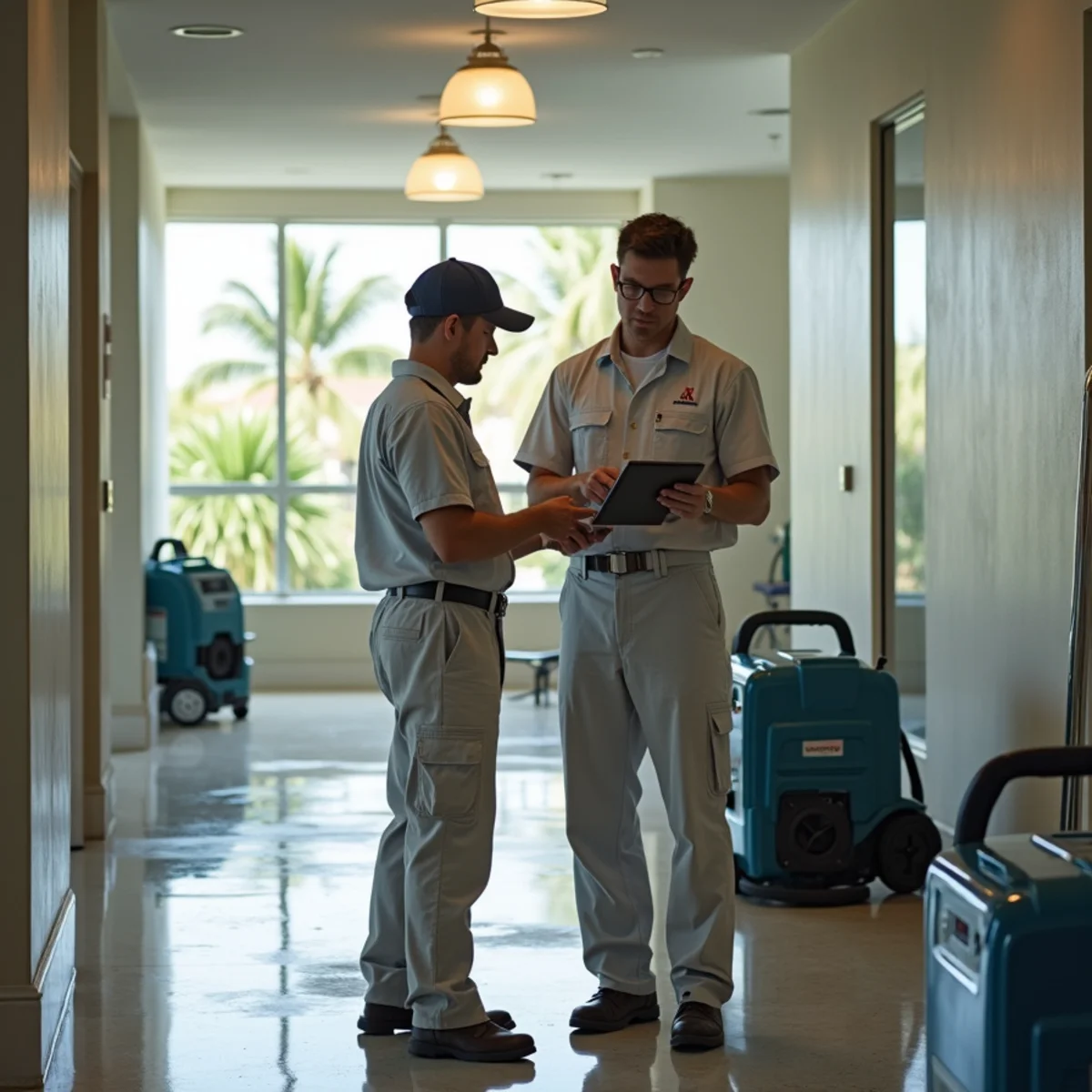
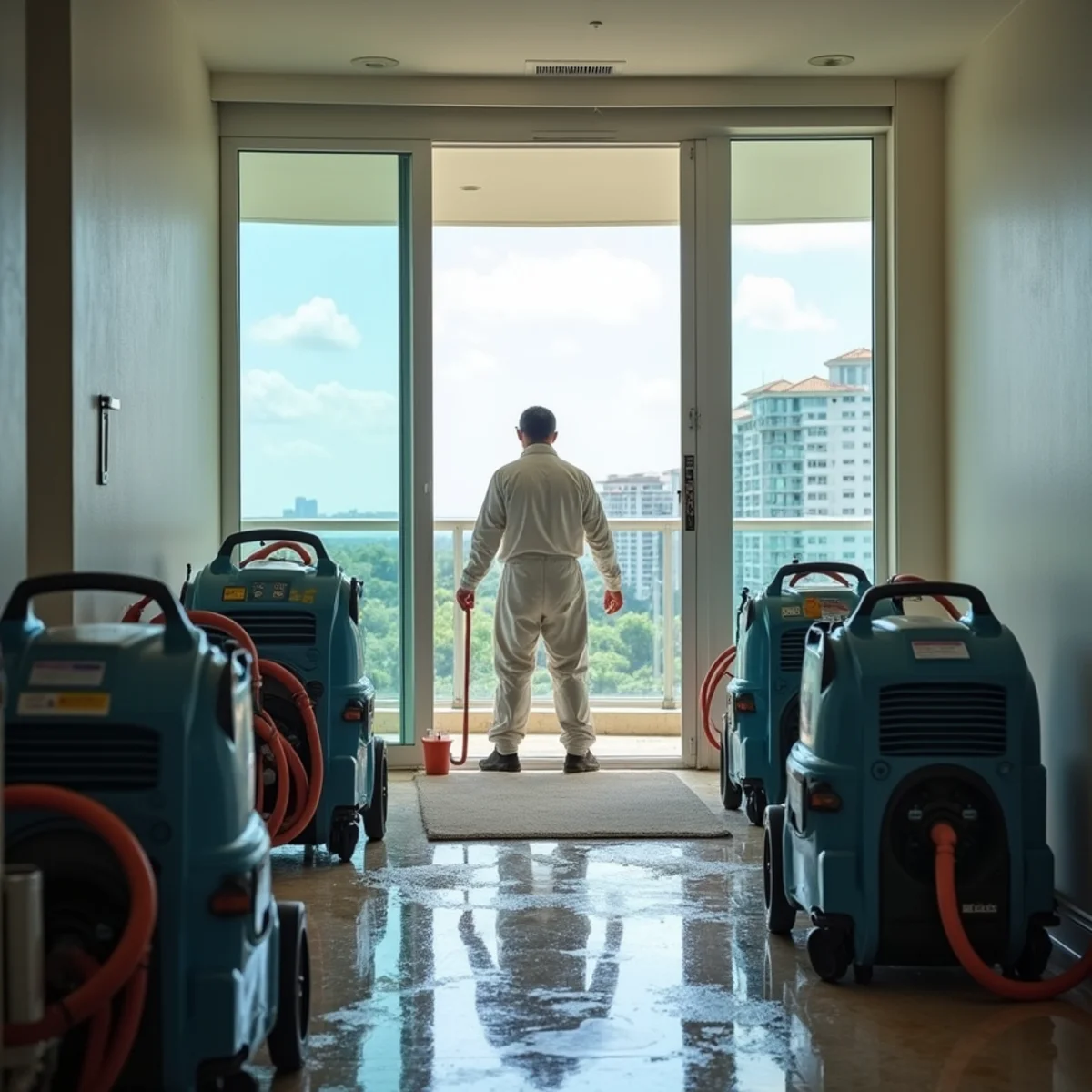
Water damage in a condo or high-rise is rarely a one-unit story. Shared walls, stacked plumbing chases, common elements, and neighboring units mean a leak can travel between residences, and the response has to account for building rules as much as building materials.
Condo water damage restoration requires coordination with management and neighboring units on top of the usual extraction, drying, and documentation. Elevator reservations, loading zones, quiet hours, and shutoff locations all affect how quickly a crew can work.
Ultra Mold Water Restoration handles condo and high-rise losses across Brickell, Edgewater, Miami Beach, South Beach, and the wider Miami-Dade market, working with HOAs and management to keep a unit loss from becoming a shared-property dispute.
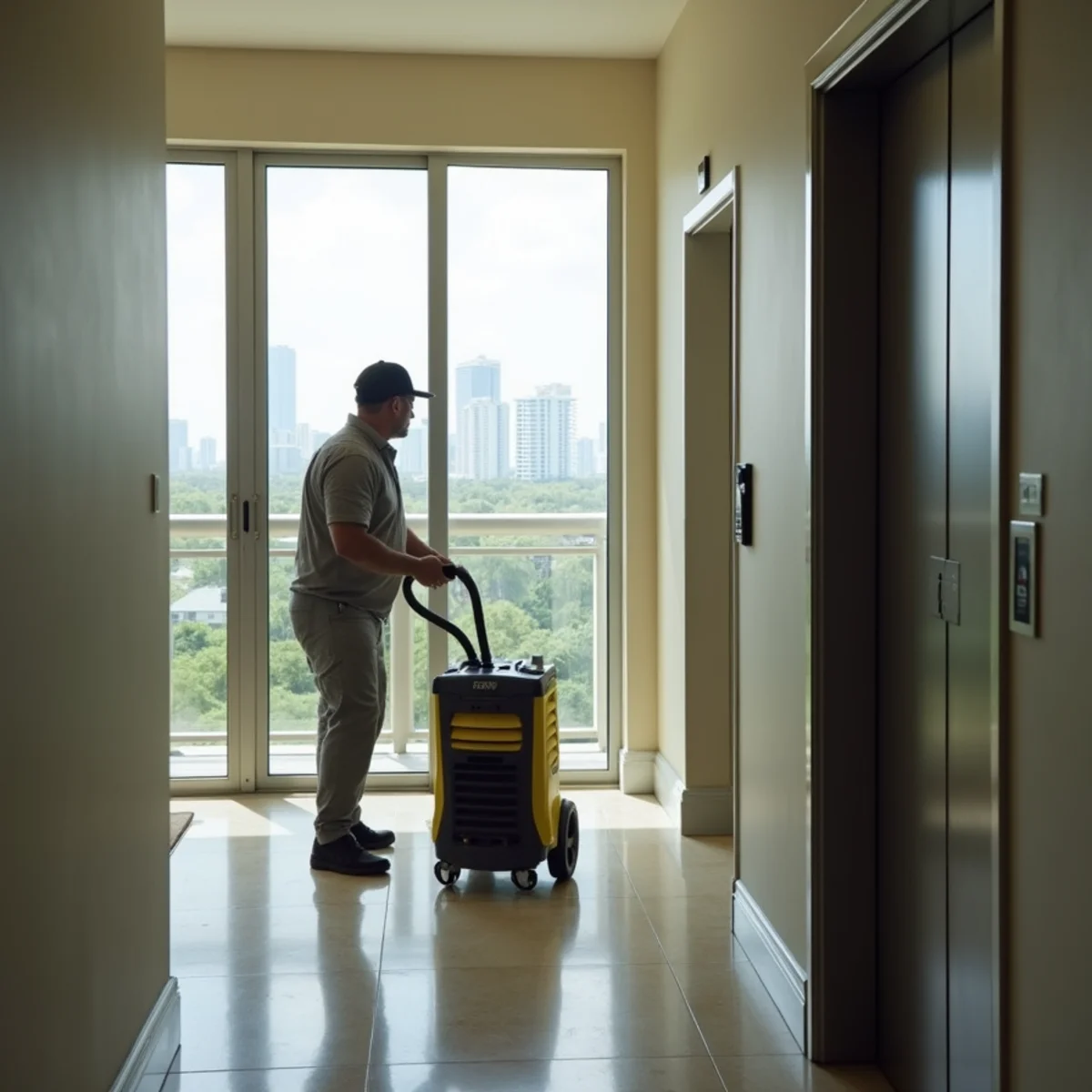
Warning signs you shouldn’t ignore
- Water appearing from a shared wall, ceiling, or neighboring unit
- Stains or dampness near plumbing chases and risers
- A leak that seems to originate above or beside your unit
- Musty odor in a unit with limited airflow
- Water intrusion around windows or sliders in a tower
- Common-area moisture reported by management or neighbors
Why High-Rise Water Damage Is Different
A single failed supply line can soak a condo floor before the elevator reaches the lobby, and because units share walls and plumbing chases, water often crosses into neighboring residences or common elements. Determining whether an affected wall, riser, or line is shared is part of the first assessment.
High-rise buildings also concentrate access challenges: reserved elevators, limited loading zones, parking constraints, and building hours all shape the logistics. Fast, accurate building information can prevent a unit loss from escalating into a larger dispute.
Coordinating Access and Building Rules
Getting the response right in a high-rise starts before the crew arrives. The more building information we have, the faster equipment and inspections can proceed without delay.
- Reserve elevators and confirm loading-zone and parking access
- Identify shutoff locations and whether lines are shared
- Confirm building hours, quiet hours, and equipment rules
- Provide gate codes, concierge instructions, and a site contact
- Notify management and adjacent owners when a shared element is involved
- Keep elevators clear for emergency equipment
Our Condo & High-Rise Process
- 1
Building coordination and access
We work with management on elevator reservations, loading zones, access, and rules for hoses and dehumidifiers so the response is not delayed.
- 2
Source and shared-element assessment
We confirm the source, check for electrical and structural hazards, and determine whether affected walls, risers, or lines are shared.
- 3
Extraction and containment
We extract water and contain the affected area to limit migration into neighboring units and common elements.
- 4
Structural drying in shared assemblies
We dry the unit's slab edges, block walls, and shared assemblies, monitoring readings toward a documented dry condition.
- 5
Documentation for owners, HOA, and insurers
We document the loss and notifications clearly, which matters when responsibility is split between a unit owner, the association, and a neighbor.
HOA-Friendly and Responsibility-Aware
Condo losses often raise the question of who is responsible: the unit owner, the association for common elements, the neighboring unit, or the source plumbing. We document who was notified and when, and we keep communication factual so the record supports a fair outcome.
Older Miami condos may also be navigating milestone inspections and structural recertification, which can intersect with water intrusion and moisture concerns. We coordinate our scope with the building's requirements and keep management informed throughout.
How Water Moves Between Condo Units
In a tower, water rarely respects unit boundaries. A failure in one residence commonly shows up in another, which is why identifying the true source and path is central to both the repair and the responsibility question.
- Stacked plumbing chases carrying leaks between floors
- Shared walls wicking moisture into adjacent units
- Balcony, slider, and window intrusion in coastal towers
- Common-element risers and lines that serve multiple units
- AC condensate and drain issues within concealed ceiling spaces
Why Choose Ultra Mold for Condo and High-Rise Damage
High-rise losses fail when the logistics fail. We handle the building side, elevator reservations, loading zones, shared-line questions, and neighbor notifications, alongside the extraction and drying, so a unit loss does not stall over access or escalate into a shared-property dispute. We are equally comfortable in a two-story building and a beachfront tower, and we adjust the staging and the documentation to whatever the association's rules require.
- Coordination with HOAs, management, and neighboring owners
- Experience staging equipment for tower access and building rules
- Assessment of whether affected walls, risers, or lines are shared
- IICRC-certified drying documented for owners, HOA, and insurers
- 24/7 response across Brickell, Edgewater, and the beaches
Condo and High-Rise Service Across the Coast
We work the towers and mid-rises where shared walls and stacked plumbing make water damage complicated: Miami Beach and Aventura on the Miami-Dade coast, plus North Miami, and Broward's beachfront and downtown buildings in Hollywood, Fort Lauderdale, and Pompano Beach.
Coastal towers add their own challenges: balcony and slider intrusion, salt-air-driven corrosion, and older buildings navigating milestone inspections and structural recertification. We coordinate our scope with the building's requirements and keep management informed so the water work does not collide with those obligations.
Access is often the difference between a fast response and a stalled one in a tower, so the more building information we have up front, the better: shutoff locations, whether the affected line is shared, elevator and loading-zone rules, quiet hours, and a site contact. We document every notification and decision, which matters when responsibility for a condo loss is split among the unit owner, the association, and a neighboring resident, and when more than one insurer may ultimately be involved.
What affects the cost
Every loss is different. These are the factors that shape your estimate — we confirm the scope during your free inspection, and the figures below are planning ranges, not a quote.
- Extent of the loss and whether it crosses into other units
- Whether affected walls, risers, or lines are shared elements
- Building access, elevator, and staging constraints
- Water category and any sanitation needs
- Structural drying time in shared assemblies
- Coordination with HOA, management, and neighboring owners
- Condo losses follow standard water damage planning ranges; access and shared-element factors are set by the on-site assessment
Need help right now?
Certified crews, 24/7, across South Florida.
Frequently asked questions
It depends on the source and the association documents. Responsibility can fall to the unit owner, the association for common elements, a neighboring unit, or the source plumbing. We document the source and notifications so the record supports a fair determination; the parties and insurers decide.
Yes. We routinely coordinate elevator reservations, loading zones, access, and building rules, and we notify management when a shared element is involved. Giving us the building details up front keeps the response from being delayed.
Document the damage, notify building management, and call for assessment. We can determine whether the affected assembly is shared and document the loss and notifications, which matters when responsibility is split between owners and the association.
Yes. We handle condo and high-rise losses across Brickell, Edgewater, Miami Beach, South Beach, and the wider Miami-Dade market, staging equipment for tower access and coordinating with building staff.
Yes. We notify management when a shared element is involved, coordinate access and equipment rules, and document who was notified and when. That record matters in a condo, where responsibility can be split between the unit owner, the association, and a neighbor.